

In short
- 1962: Enrique Corcuera creates padel at his home in Acapulco (Mexico) by adapting a fronton court.
- Arrival in Spain: Alfonso de Hohenlohe builds the first courts at the Marbella Club.
- Expansion: Argentina and Spain turn it into a phenomenon; in 1991 the International Padel Federation is founded.
- Today: Premier Padel is the main professional tour and padel is one of the fastest-growing sports.
Padel is now one of the most played sports in Spain, but its origin is much more recent and curious than it seems. We look back at its history: from an adapted fronton court in Mexico to glass courts and the professional tour.
The origin of padel
The origin of «paddle» dates back to 1962 at the home of Mr Enrique Corcuera in Acapulco, Mexico. To add a new dimension to the game, Corcuera built a wall opposite an existing fronton court at his home, placed a net in the middle and closed the sides of the playing area with low half-walls. This gave rise to the sport known as paddle.
These walls were built mainly to prevent landslides and to avoid losing the ball (originally black) in the vegetation around Mr Corcuera's house, which amused the hunting friends with whom he shared the game.
The first rules
The first set of rules was written by Enrique's wife, Viviana Dellavedova Corcuera, former Miss Argentina 1964, who edited it and gave it to her husband as a birthday present. These rules, compiled and written down for the first time, were published under the name “Paddle Corcuera” Rules.
That is why what we now know as padel was originally called Paddle Corcuera or Paddle-Tennis.
Since that first document many changes have been made, the most significant relating to harmonising the rules used in Argentina and Spain
The court
From the first court at Mr Corcuera's home, which was practically an adapted fronton built so that things like branches and stones from the mountain wouldn't fall onto the court… it reached Spain with Alfonso de Hohenlohe and the construction of the first court in Marbella, in a format closer to what we know today.
The original court measured about 10 metres wide by 20 metres long, very similar to today's official dimensions, and the surfaces were concrete.
Later courts were copies of these first ones without clear rules on their dimensions and enclosures, and some courts were even built with the fence at 1.5 m simply by “copying” the first clubs in Mar del Plata (Argentina)
As the game became more popular, courts also evolved. Concrete courts began to be built, which were more durable and allowed a harder, more competitive game. These courts were also safer, as players didn't have to worry as much about injuries if they fell.
Little by little, padel courts improved. They began to be built with better-quality materials, such as concrete and brick, as well as nets and wire to protect players. This made the game safer.
The first Argentine courts had no mesh on the sides, so points could be won easily
In 1989 the company Master Producciones developed the first glass court (Crystal Palace), invented by Juan Carlos de Marco, which changed the history of padel and is the reason we can enjoy television broadcasts today.
The first rackets
When the sport was created, there was no specific equipment, so the first padel paddles were those used in the USA in a sport known as Platform Tennis, played with wooden paddles. Corcuera, in one of his few interviews, said that he was inspired by this American sport to build the first padel court.
A later evolution of the rackets kept the wooden construction with an outer metal rim showing some rust, typical of the era.
In both Spain and Argentina, in the early days of padel the first paddles were from the American brand “MARCRAFT” for Paddle-Tennis. These paddles were made of wood with holes and an aluminium profile, and could weigh up to 500 grams. Over the years they evolved, began to be covered with a plastic laminate and their weight dropped considerably.
The first paddles made specifically for padel were built in Argentina in the early 1980s. One of the first was the COAST “Super Bronco” model. This paddle came about because engineer Julio Perez Corral (a pioneer of Argentine padel) built some “Bronco” models for his friends, as it was very hard to get paddles to play with, since the only ones available were imported from the USA.
Later they became wider and thicker to gain power, but because of the weight lighter, more elastic materials had to be found. That is when, in 1989, SANE invented the rubber racket, reaching or even exceeding today's 38 mm thickness limit set by the federation.
Padel in Spain
Spain was the second country where padel began to be played. It arrived thanks to Prince Alfonso de Hohenlohe, who in 1970 built two “courts” at his Hotel Marbella Club, shortly after spending several summers in Acapulco, where he got to know the new game at the home of his friend Enrique Corcuera.
He built his courts with some modifications, partially replacing the side walls with wire mesh. During the 1980s and 1990s these courts hosted the famous “Pro-Am” tournaments, sponsored by the “Smith & Smith” shops in Las Arenas, Bilbao, Spain, owned by Mr Julio Alegría Artiach, one of the most important people in the history and development of padel, who together with figures of the time such as Manolo Santana popularised the sport.
In Spain it spread from Marbella to Madrid, Andalusia and the Basque Country, and from there to the rest of Spain.
Many players from Argentina learned about padel in Marbella and, when they returned to Argentina, began to spread padel as a fun, easy game with cheap facilities.
Padel was officially recognised as a sport by the Basque Sports Council from 11 November 1991, when it ruled that padel was a new sport, independent from tennis and squash, with playing characteristics and rules clearly distinct from those sports; at that time the padel federation had 400 Basque members and 1,000 in total.
A very important event in the history of padel in Spain was the creation of the Spanish Padel Federation (FEP) in 1994, a year after the Higher Sports Council recognised padel as a sport. Since then it has organised the King's Cup and the Spanish Padel Championship, among other tournaments.
PADEL IN ARGENTINA
The global spread of padel in the 1970s: padel spread to other countries in Latin America and Europe in the 1970s and began to gain popularity on other continents.
In 1975 a group of Alfonso's friends (Julio Menditeguy, Nelly Arrieta de Blaquier, Dino Montuschi, Willy Gainza Paz, Ignacio Viale del Carril, Roberto Rivera), who spent their summers on the Marbella coast, introduced padel to Argentina.
The first courts were built in the 1970s at the Menditeguy family stud farm in San Antonio de Areco and at the Blaquier family's La Biznaga estate. Around the same time another was built at the Ocean Club in Mar del Plata (considered the cradle of padel)
In the summer of 1983, with a court built at the Zorba beach club, the game became a craze thanks to its characteristics and its well-known players, such as Ricardo Cano, Cacho Aubone and former Davis Cup tennis players like Roby Gatiker.
By 1987 there were 330 courts in Argentina, 220 of them in Mar del Plata.
From then on the sport never stopped growing: between 1992 and 1993 it reached its peak, with four million players and 5,000 courts registered in Buenos Aires city and Greater Buenos Aires.
The first championships
In 1988 the first Spanish-Argentine championships were held at Club Príncipe Sport in the Beefeater Master, where the Argentines were clearly dominant. Women first took centre stage in 1989 at the second Spanish-Argentine championships in Getxo.
That same year the first circuits were created in Spain (Beefeater and J & B)
For Expo 1992, Julio Alegría, founder of the Spanish federation, organised the first international padel tournament.
The Padel Pro Tour (PPT) was the most important professional padel tour in the world during its seven years of existence (2006-2012), both for the organisation of its tournaments and for the participation of the best international players.
The World Padel Tour came from an agreement between the Professional Padel Players Association (AJPP), the Spanish Women's Padel Association (AFEP) and the group of professional padel tournament organisers, and was the main professional tour between 2013 and 2023. Since 2024 that role has been taken by Premier Padel, founded in 2022 together with the FIP.
Padel timeline
- 1962: Birth of padel
- 1970: Introduction and first padel courts in Spain (Hotel Marbella Club)
- 1975: Introduction of padel in Argentina.
- 1987-88: Argentine Padel Association
- 1989: First glass court
- 1991: Founding of the FIP (12 July), International Padel Federation.
- 1991: Recognition of padel as a sport / Spanish Padel Association
- 1991: The International Padel Federation is founded in La Moraleja (Madrid) with representatives from Argentina, Spain and Uruguay.
- 1992: 27 April – Founding of the Mexican Padel Federation.
- 1992: First Padel World Championship between Argentina, Spain, France, England, Italy, Mexico, Paraguay and Uruguay, won by Argentina in both the men's and women's events.
- 1995: Debut as an exhibition sport at the Pan American Games in Mar del Plata
- 1996: 4 April – Founding of the Spanish Padel Federation
- 1997: Unification of the rules of padel (Barcelona)
- 2005: Birth of the Padel Pro Tour
- 2013: Birth of the World Padel Tour and its official recognition by the International Federation.
- 2022: Birth of Premier Padel.
- 2023: Padel included in the European Games in Kraków and last World Padel Tour tournament
- 2024: Premier Padel becomes the only major professional tour
First federations and associations
| Date founded | Country | Name of the organisation, body or institution |
| 26/10/1988 | Argentina | Argentine Padel Association |
| 01/01/1991 | Spain | Spanish Padel Association |
| Spanish Association of Padel Clubs (22/09/1993) | ||
| Spanish Padel Federation (28/09/1996) | ||
| 01/01/1991 | Uruguay | Uruguayan Padel Association |
| Uruguayan Padel Federation (01/12/1991) | ||
| Friends of Padel Association (04/04/2000) | ||
| 19/02/1991 | Italy | Federazione Italiana Gioco Paddle |
| Italian Tennis Federation (since 01/01/2011) | ||
| 01/01/1992 | France | Fédération Française de Pádel Fédération |
| Ligue National de Pádel (10/12/2012) | ||
| Française de Tennis (since 05/08/2015) | ||
| 27/04/1992 | Mexico | Mexican Padel Federation |
| 29/06/1992 | Paraguay | Paraguayan Padel Federation |
| 29/10/1992 | Belgium | Fédération Belge de Pádel |
| Pádel Belgium (01/01/2008) | ||
| 01/01/1993 | USA | United States Pádel Association |
| 03/07/1993 | Canada | Paddle Association of Canada |
| 30/07/1994 | Brazil | Confederação Brasileira de Pádel |
| 27/10/1994 | Austria | Österreichischer Pádel Verband |
| 05/12/2003 | Portugal | Associação Portuguesa de Pádel |
| Federação Portuguesa de Tenis (since 01/01/2010) | ||
| Federação Portuguesa de Pádel (26/04/2012) | ||
| 01/03/2006 | United Kingdom | The Pádel Federation (United Kingdom) |
| British Pádel Association (02/04/2014) | ||
| 20/03/2006 | Netherlands | Nederlandse Pádel Sport Federatie |
| Nederlandse Pádelbond (01/11/2010) | ||
| 10/07/2006 | Switzerland | Schweizer Pádel Verband |
| 08/05/2008 | Australia | The Australian Pádel Federation |
| 16/10/2009 | Russia | Russian Padel Federation |
| 30/10/2009 | Finland | Suomi Pádel Liitto |
| 18/01/2010 | Germany | Deutscher Pádel Verband |
| 13/03/2010 | Sweden | Svenska Pádelförbundet |
| 02/11/2010 | Chile | Federación Deportiva de Pádel Tenis |
| Federación Deportiva Nacional Padle (13/09/2011) | ||
| 12/05/2011 | Dominican Republic | Dominican Padel Federation |
| 09/02/2013 | India | Pádel Federation of India |
| Indian Pádel Federation (07/10/2016) | ||
| 05/10/2013 | Lithuania | Lietuvos Pádelio Federacijos |
| 15/01/2014 | Guatemala | National Padel Sports Association of Guatemala |
| 11/07/2014 | United Arab Emirates | United Arab Emirates Pádel Association |
| 17/09/2014 | Principality of Monaco | Fédération de Pádel de Monaco |
From the origins to your first racket
More than sixty years later, padel is played all over the world and rackets have gone from wood to carbon. If you want to start, read our guide to padel for beginners and the one on how to choose a racket; and if you are curious about the brands, look back at the history of Bullpadel, Nox o Adidas.
Start writing your own story
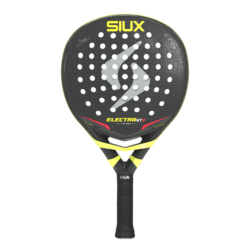

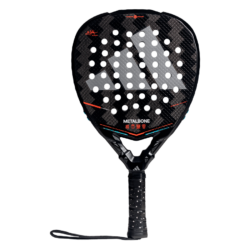

Find your padel racket
More than 250 rackets by level, shape, brand and price.
FAQs
Where and when was padel invented?
Who brought padel to Spain?
When was the International Padel Federation created?
Sources: padelfip.com · es.wikipedia.org · elguardiandelpadel.wordpress.com · masaryk.tv · lanacion.com.ar · businessinsider.mx · es.wikipedia.org · youtube.com · mundipadel.com · padeltotalweb.com · es.wikipedia.org · xn--pdelsuis-8ya.com · empadelados.com · padelfederacion.es